

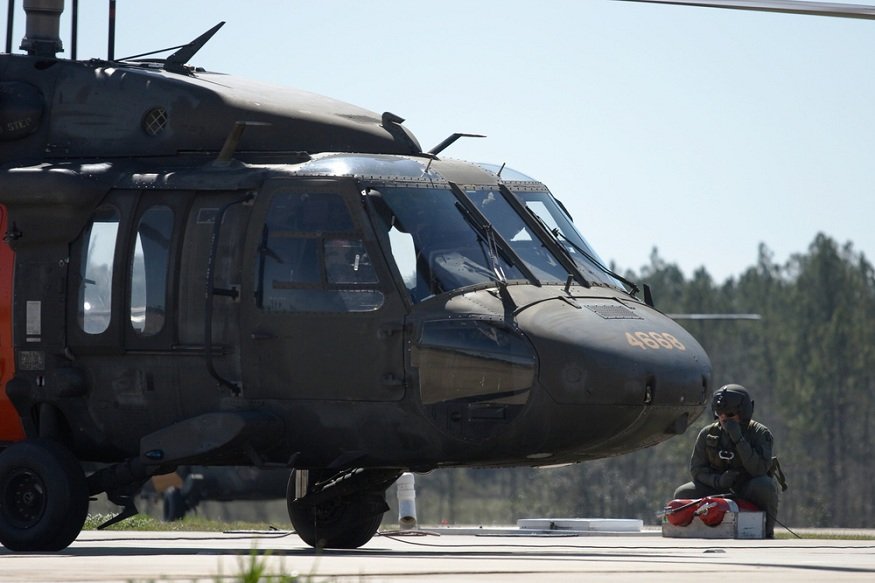
Add a pound of armor, and you’ve just given up a pound of something else. Nobody enjoys saying that part out loud. Fuel, cargo, kit, and people. In the end, something pays. And the bill never goes unpaid. On a mission aircraft that’s not a footnote. It’s the difference between finishing the job and turning back short.
The Trade Nobody Escapes
An aircraft lifts what it lifts. Physics decided that, and physics isn’t taking requests. Everything you load competes for the same fixed allowance. Armor is just one more claimant standing in line behind fuel, crew and whatever the tasking actually requires.
Fit a heavy protective layer and the arithmetic bites back immediately. Less fuel, so a shorter leg. Or gear gets left on the ramp. Or one fewer seat occupied. You don’t negotiate your way out of this. Weight going on in one place comes off somewhere else. And it comes off whether you planned for it or not.
What The Mission Actually Needs
Before a single plate gets fitted, somebody has to answer a plain question: what is this flight for? Pulling casualties out of a hot landing zone asks for one thing. Loitering at altitude for six hours watching a coastline asks for something close to the opposite.
Short run into somewhere genuinely nasty? Load the protection; range barely matters when you’re twelve minutes out. Long transit over quiet ground, minimal threat? Strip it and spend the margin on fuel. Match armor to tasking, never the reverse. Get that backwards and you’ve either hauled dead weight for nothing or sent people out thin.
Protecting The Right Things
Smart beats heavy here, and it isn’t close. Nobody serious tries to shield a whole airframe; you’d eat the entire payload and still end up with gaps where it counted. So you choose. Crew first. Fuel lines. The control runs holding everything together.
Lightweight armor that always does its job by being right there where the rounds are most likely to hit; that is what will truly protect you without stripping your mission of its meaning. LifePort has earned an excellent reputation when it comes to ballistic armor for aircraft, providing the needed protection to the flight crew without adding too much weight and leaving enough space for the payload and fuel necessary for the mission.
Doing The Math
Every mission aircraft sits on top of a long, unglamorous list of tradeoffs. Planners run protection against range against lift, and they run it again when the tasking shifts. There’s nothing intuitive about it. It’s arithmetic, done carefully, usually more than once.
Read More: Canada Visa Application Mistakes to Avoid for Dubai
Too much armor and the aircraft can’t get there or can’t carry what it needs when it does. Too little and you’re gambling with your crew. The answer lives somewhere between those two, and it moves. Different threat, different distance, different answer. Which is why no fixed formula survives contact with real tasking.
When The Choice Pays Off
Good configuration goes unnoticed. The crew is sufficiently safeguarded against a few bad seconds, while the aircraft manages to carry all the necessary load. No one pays attention to all the juggling that is going on. This is actually the idea behind it. Success in doing so relies heavily on good judgment. It relies on figuring out what needs to be defended and what to give up. It means understanding that additional protection doesn’t guarantee safety. It additionally means that an overly heavy aircraft cannot perform its mission.
Read More: Top Reasons to Visit Bromont on Your Next Quebec Getaway
Conclusion
Protection costs. The skill is in spending that cost somewhere it earns its keep. Guard what matters, leave what doesn’t, keep enough margin for the mission to actually work. Armor that grounds an aircraft is dead weight wearing a uniform. Smart protection flies.